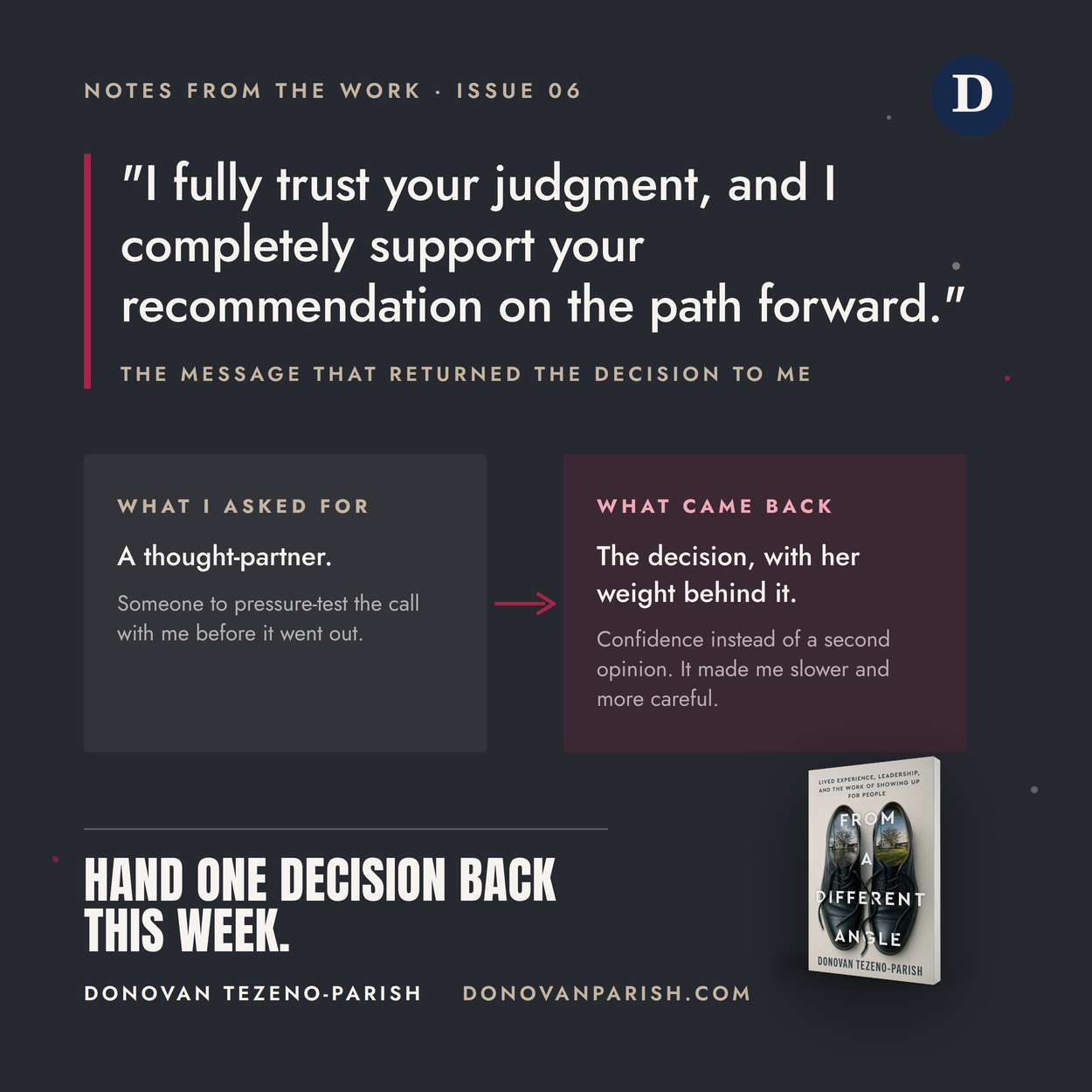
The decision had sat with me for days. It came down to one person's situation, and my recommendation was already written. I sent it up anyway. I wanted my leader to be a thought-partner on it, to pressure-test the call with me before it went out.
Then the message came back.
"I fully trust your judgment, and I completely support your recommendation on the path forward."
I read it twice. She hadn't argued the call with me. She'd handed the decision back with her weight behind it. You don't need a partner on this one, she was saying. You need my confidence, and you have it.
Something changes in a person the moment they're actually trusted. I worked harder to be worth that sentence than I ever worked to avoid a consequence. Not because I was told to. Because someone had bet on my judgment, and I wasn't going to be the reason the bet went bad.
The bet most leaders make too late
Most of us treat trust as a reward. You hand it over once someone has proven themselves, over and over. An audition with no closing date. Given early, it works more like an investment, and it tends to create the very thing it's betting on. People rise to the level of the confidence placed in them. The ones who've spent a career being watched rise fastest. Nobody's ever backed them before, and they can feel it.
I know that from the inside. The leaders who marked me decided my judgment was worth something before the record said so. Every one of them got more from me than my job description asked for. What I went years without is what I hand out first now.
That sentence did a second thing, and it took me longer to notice. It made me slower and more careful. When the decision is yours, you read the file one more time, and you call the person you've been meaning to call. Permission lets you move fast and blame the approval later. Confidence takes that exit away.
Who on your team is still asking permission for a call they already know how to make?
So here's the practice, and it costs you nothing but nerve. Pick one person on your team you've been supervising a little too closely, someone good who keeps checking with you before they move. This week, hand one of those decisions back. Tell them you trust their judgment, and mean it, because people can hear the difference in about four words.
Handing a decision back isn't walking away from it. Name the decision that's theirs now. Then be specific about what would make you want a heads-up. "Keep me posted" is a leash with a longer rope. Safety. Legal exposure. A number above a threshold you say out loud. Everything under that line is theirs. Stay reachable without hovering, which is harder than it sounds when you can watch a call go a way yours wouldn't have gone.
Let it go that way anyway. A decision you take back the first time it wobbles was never handed over. It was loaned, and everyone watching knows the difference.
You won't just get a decision made. What comes back is a different person, and you'll keep them for years.
Trust given early, long before the paperwork says it's earned, is one of the threads running through my book. You can follow where From a Different Angle is in the process at donovanparish.com. If you want something to use this week, the Angle Check is free and lives there too.
-Donovan
I worked harder to be worth that sentence than I ever worked to avoid a consequence.