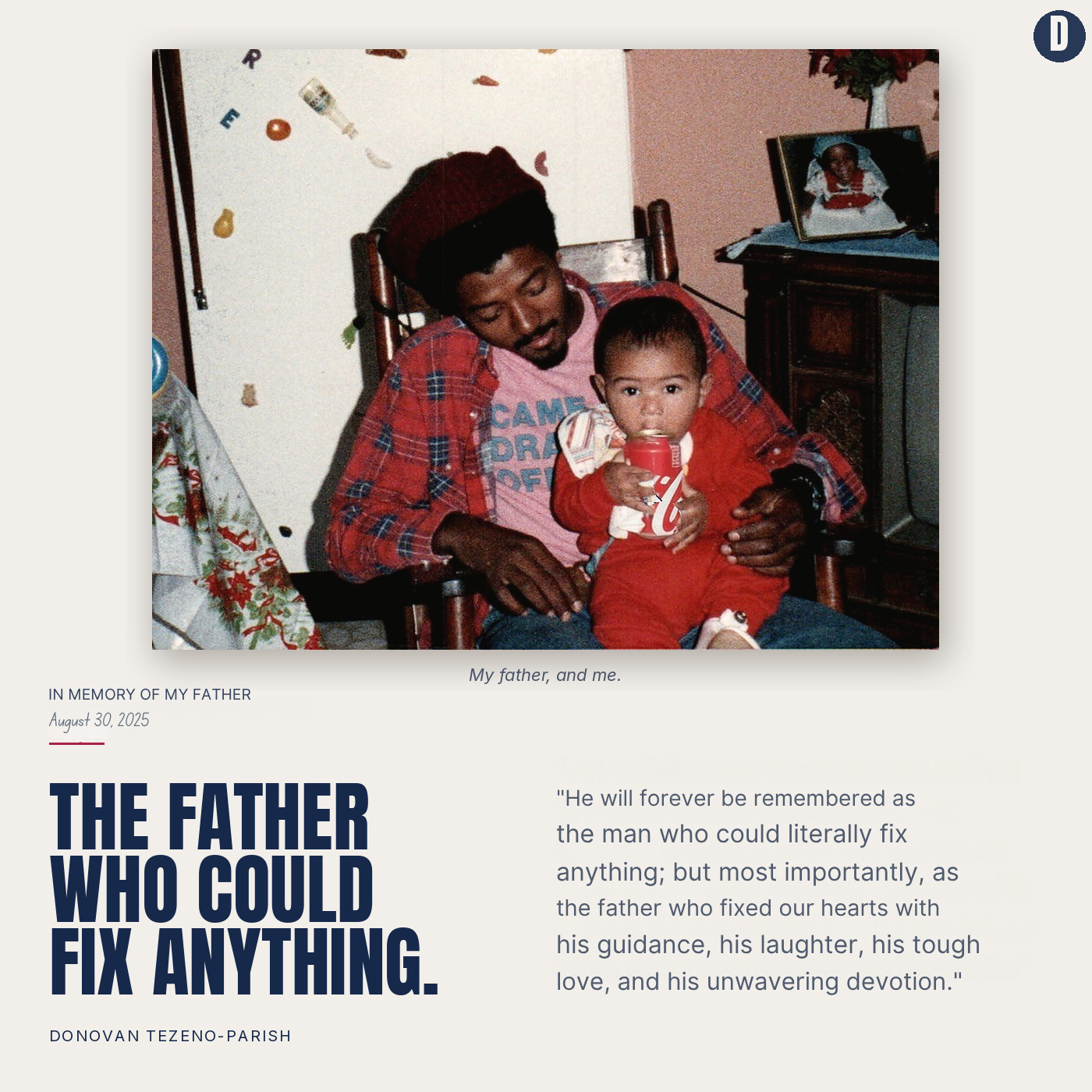
My father was fifty-nine when his body started to give out. Kidney first, then liver. The kind of slow decline where you learn to read a hospital monitor, and where every phone call drops your stomach before you even see the screen.
The world does a strange thing when yours is ending. It keeps going. Meetings still get scheduled. Deadlines still land. The work doesn’t pause to ask how your father slept, or whether he still knew you when you walked in. It just keeps moving, and it expects you to move with it.
I kept leading through it. I showed up, I answered, I carried what I was carrying and set it down at the door of every meeting so nobody would have to step over it. Some of that was strength. Some of it, if I’m honest, was that I didn’t know how to be a man falling apart and a leader in the same hour, so I chose the one I knew how to do.
And somewhere in that month, another leader made it clear the work wouldn’t be waiting on me. Not cruelly. Just plainly. The calendar was the calendar. The results were the results. My father was mine to grieve on my own time.
I understood the message. And I made a quiet decision about the kind of leader I would never be.
There was another leader in that month too. “Don’t worry about things here, we got this.” I have not forgotten it.
My father told me one thing more than any other. Your name is all you have. He meant that when everything else is stripped away, the title, the money, the room, what’s left is how you treated people when it cost you something. In the middle of losing him, I watched two kinds of leadership stand side by side. One saw a deadline. One saw a son.
Here’s what that month taught me, and what I’d hand to anyone who leads people.
When someone’s world stops, they don’t need you to fix it. You can’t. What they need is for you to be the person who lets the calendar wait, who says out loud, “this can hold, go be where you need to be,” and means it.
The person who seems checked out is almost never dropping the ball. They’re standing in a truth you can’t see from your chair. So before you decide what their silence means, move to where they’re standing and ask what they’re carrying. Grief is just the clearest version of something that’s true every ordinary day. The room reads the surface, and the surface is almost never the story.
I’m sharing this a year to the day after I lost him. Keeping his high standard for his children in front of people, and doing something useful with it, is the only way I know to honor him.
I lead the way I do because of a man who taught me my name is all I have. The kindest thing I know to do with mine is to be, for someone in the worst month of their life, the leader I needed in mine.
-Donovan
The room reads the surface, and the surface is almost never the story.