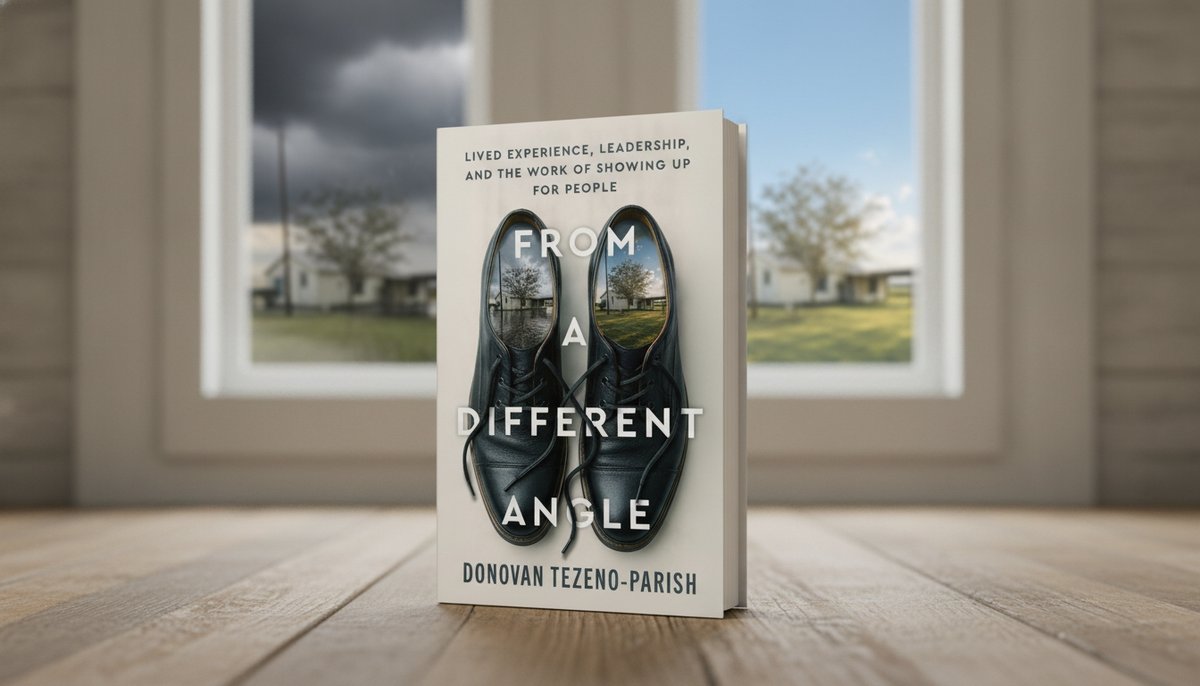
I never thought I’d be here, writing a book.
For most of my life, I was the one other people were sure they had figured out. Usually from across a room, and usually wrong. A book with my name on the cover was nowhere near the list of things I saw coming.
But I kept running into the same thing, in break rooms and boardrooms and every hard room between them, and eventually I had to write it down.
There’s a moment I’ve watched play out in more meetings than I can count. A name comes up. And before anyone has said a full sentence about the person, the room has already decided who they are.
You can feel it settle. The slight tightening, the story everyone already agrees on. He’s difficult. She’s not strategic. He waits to be told what to do. Whatever it is, it hardens fast, and once it does, almost nothing the person actually does can move it. They’re not being evaluated anymore. They’re being confirmed.
I notice it because I’ve been the name on the table.
Years ago I sat at my own kitchen table and listened to a leader tell me, with complete confidence, that I wait to be told what to do. I am the opposite of that person. I move before anyone asks. But she was sure, and her certainty had nothing to do with me. It had everything to do with where she was standing, and she never moved from that spot long enough to see anything else.
That’s the thing I’ve spent a career learning. Being certain about a person and actually seeing them are not the same act. Most rooms confuse the two.
I learned it first a long way from any office.
Same water, two truths
When I was young, a hurricane took my family’s house. For years I saw one thing when I looked back at that day: everything we lost. It took me a long time to see the same day from another angle, to notice that while I stood there watching it end, my parents were already deciding what would come back first. Same water. Same day. Two entirely different truths, and which one I saw came down to where I was standing.
People are like that too. The person your room has written off is usually standing in a truth you can’t see from your chair. The one everyone calls difficult is almost always protecting something. None of that excuses anything. It just means the read you’re so sure of is partial, and you’re about to make a real decision on it.
So here’s the practice I run, quietly, before I let myself land on who someone is. I call it the Angle Check, and this is where it begins.
Before you decide who a person is, ask one question. Where would I have to be standing for their version of this to be the true one?
That’s it. You don’t have to agree with what you find. You just have to go look. Almost every time I actually move to someone’s angle, I find something that changes what I’m able to do for them. And what I can do for a person is the whole job.
Try it this week on one person you’re sure about. The one the room already agreed on. Move to their chair before you sign off on the story, and see what your angle was hiding.
This is the discipline my whole book is built on. From a Different Angle is on its way, and I’m building it here with you, one hard room at a time.
-Donovan
The angle you see a person from decides what you're able to do for them.