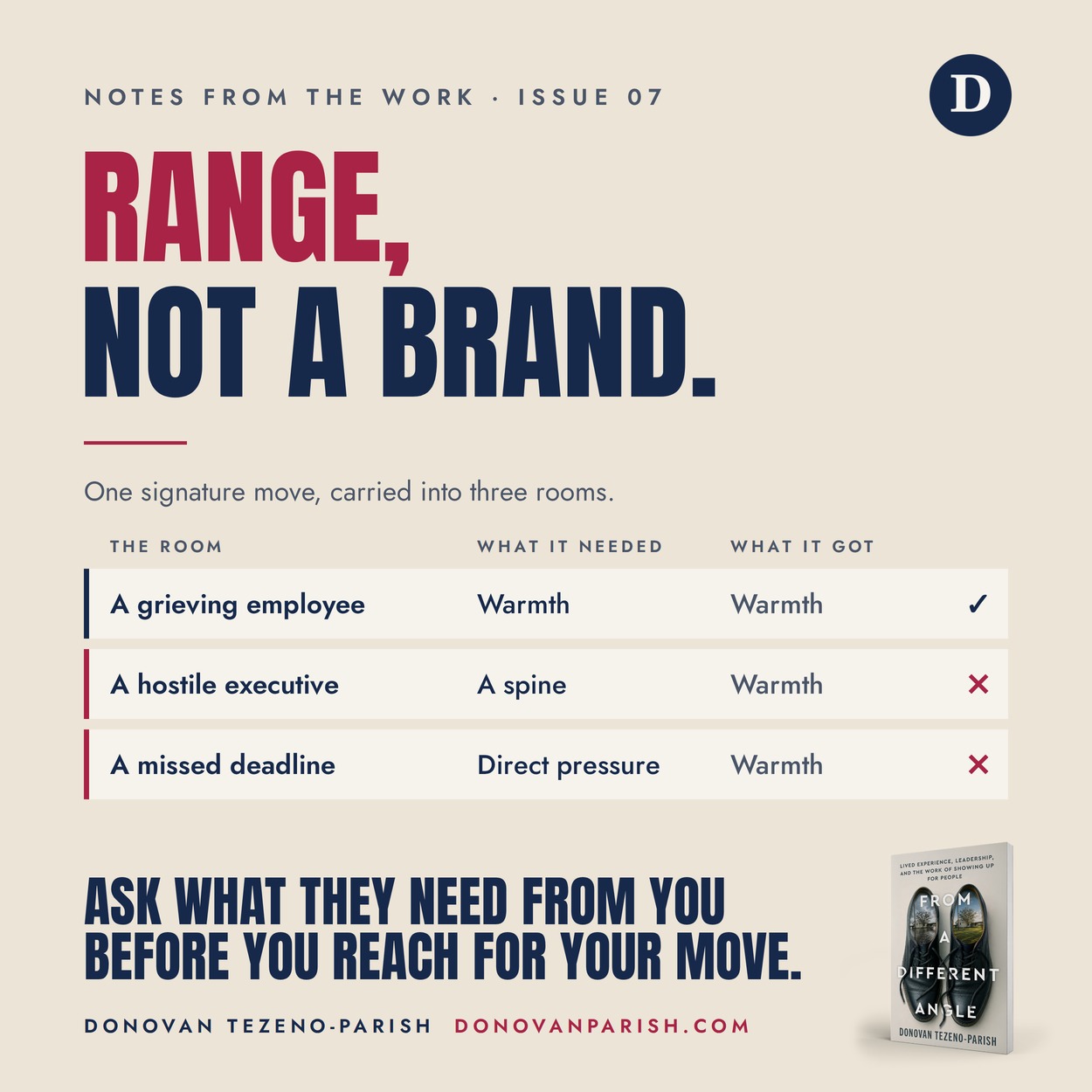
I watched a colleague walk the same move into three rooms that needed three different things.
They called themselves a relationship-oriented leader, and they were proud of it. Personal, always leading with the connection. The first room was a grieving employee, and connection was exactly what that room needed. The second was a hostile executive who needed a spine across the table. The third was a missed deadline that needed plain, direct pressure. All three got the same relational open. Only the first room got what it needed.
The connection was real in every one of those rooms. It just showed up at the wrong time. When a hostile room gets the relational open before it gets the subject, it reads that open as room to push. When a missed deadline gets a gentle check-in, the check-in can sound like permission to miss the next one. Same move. Three different results.
How a strength turns into a ceiling
It's an easy trap, and from the inside it feels like strength. You lean into what you're good at. You build a reputation. "I'm the direct one." "I'm the empathetic one." "I'm the data person." Every one of those is a real strength, right up until it becomes the only move you own. Then you start carrying it into rooms that needed the opposite.
The moment you make one tool your identity, you stop reading the room. You've already decided who you are before you walk in. That colleague traded range for a brand and didn't notice the trade.
I've said a version of this to leaders more times than I can count. Your way of doing things works, and you know it works. But if it isn't getting through to this employee, what can you change about how you're communicating so it does? Adjusting to what a person needs is part of leading them, and it runs both ways. You flex for them. They flex for you.
What range never changes is the standard. When an employee gets heated in a meeting, I coach the leader to give them the break. Let them step away and breathe. Then come back and say it plainly: I wanted to give you time to calm down, and we still need to be respectful. The break was range. The standard didn't move. Context changes how you have the conversation. It doesn't change whether you have it.
What does your team count on you to do, whether or not the room needs it?
So here's the check. Think of the two or three words people would use for how you lead. Now ask the harder thing. Is that a description of my strengths, or the ceiling I've stopped climbing past?
Then take one question into your next hard room. It's one I ask more than almost any other: What do you need from me? Ask it of yourself before you walk in, about the person on the other side. Ask it of them once the subject's on the table. Their answer tells you which tool the room calls for. Your habit only tells you which one you like.
If the answer isn't your usual move, reach for the one you use least. The direct leader slows down and asks one more question. The empathetic leader names the problem in the first minute. The data person sets the spreadsheet down and asks, "How did we get here?" It'll feel awkward the first few times. That awkwardness is range being built.
A brand is one move. Range is reading the person in front of you and giving the moment what it needs, even when that's the thing you're least known for.
This week, catch yourself reaching for your signature move. Pause long enough to ask what this person needs from you. If it's not your usual tool, reach for the harder one anyway.
Range over a brand is one of the core ideas in From a Different Angle. You can follow where the book is in the process at donovanparish.com. If you want something to use before your next hard room, the Angle Check is free and lives there too.
-Donovan
Your habit tells you which tool you like. The person in front of you tells you which one the room needs.